Why Supplier Due Diligence Matters More in This Category
Research peptides are sold in a category with little external oversight of individual sellers. There is no universal accreditation a buyer can check, and a professional-looking website costs the same to build whether or not the product behind it is documented. That puts the due-diligence work on the buyer — and the good news is that it takes about five minutes, because a documented supplier can answer the same five questions every time.
The Five-Question Checklist
Use this checklist on any supplier you're evaluating, including us.
1. Who Ran the Purity Test?
A good answer names a specific independent laboratory. A weak answer says “tested in-house,” or doesn't answer the question at all. In-house testing is a self-assessment, not independent verification.
2. Can You See the Chromatogram?
A good answer is yes, attached to the Certificate of Analysis. A weak answer is a purity percentage with no chart behind it — a number you're asked to simply trust.
3. Is the COA Batch-Specific?
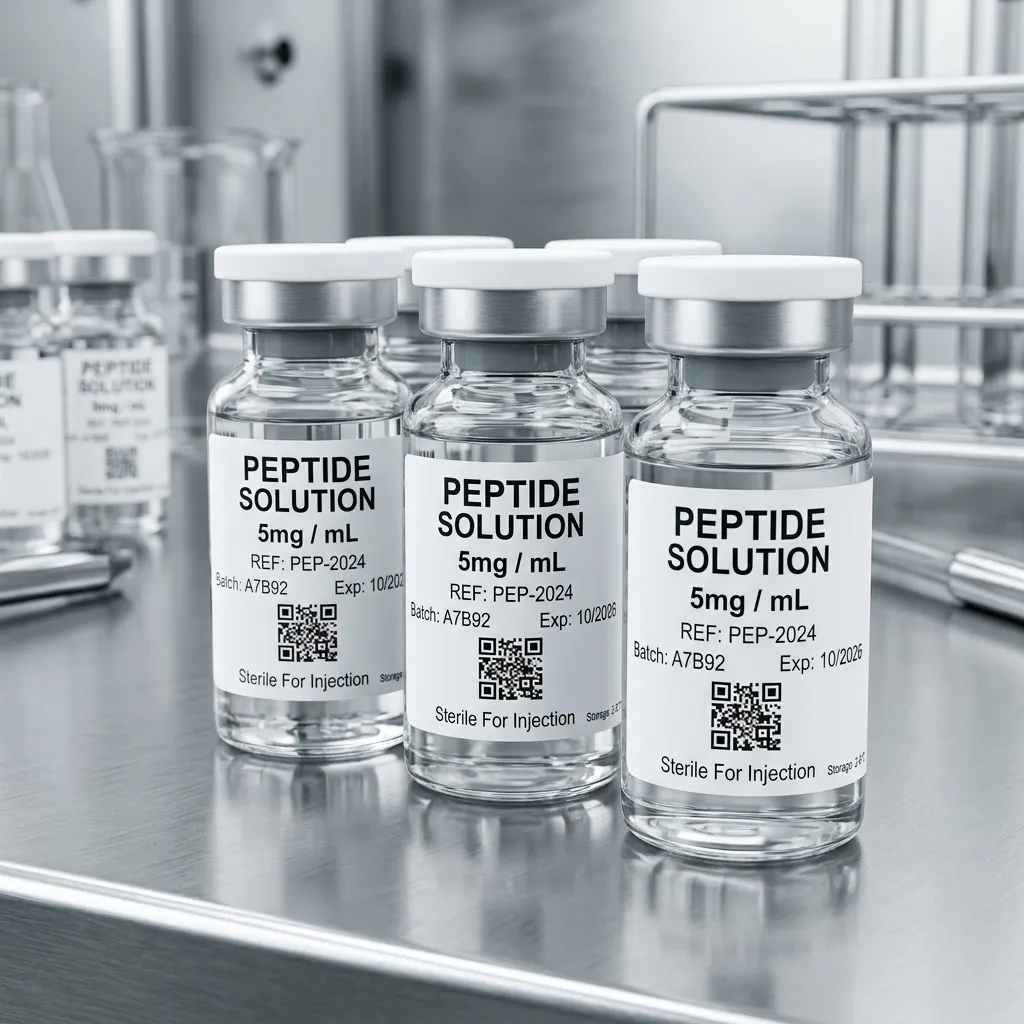
A good answer includes a batch number on the COA that matches the number on your vial. A weak answer is one generic COA reused across every order, regardless of which batch actually shipped.
4. Where Was It Synthesised?
A good answer names a country and a facility type. A weak answer is “sourced globally” or no answer at all — language that avoids naming any single accountable location.
5. Can You Retrieve the COA Later?
A good answer is yes, by batch number, from an archive. A weak answer is that the document exists only in the original order email, with no way to request it again later if you need it for a methods section or an audit.
A Sixth Question Worth Asking: Do They Talk About Compliance?
A supplier that consistently frames its products as Research Use Only — on the homepage, on every product page, in the footer, and not just in one buried disclaimer — is signalling that it takes the category's regulatory reality seriously. Inconsistent framing, where some pages emphasise research use and others drift toward outcome-focused language, is often a sign that compliance is an afterthought rather than a operating principle.
How to Actually Verify a Chromatogram Once You See One
You don't need to be an analytical chemist to sanity-check a chromatogram. Look for one tall, dominant peak with a flat baseline elsewhere on the chart — that pattern is what a clean batch looks like. Multiple smaller peaks scattered across the chart suggest impurities or incomplete synthesis. If you want the fuller explanation of how to read HPLC and mass spectrometry results together, our guide to reading a peptide Certificate of Analysis covers it in detail.

Other Signs of a Serious Operator
- Purity figures stated consistently across the homepage, product pages and the COA itself
- A Research Use Only disclaimer present on every page, not just buried in the footer
- A named testing laboratory that doesn't change between batches without explanation
- A described, documented production process rather than vague marketing language
- A support channel that answers specific batch questions rather than deflecting them
Red Flags to Walk Away From
- No COA offered until after you've already paid
- Purity claims with no chromatogram, mass spectrometry result, or batch number attached
- Vague sourcing language like “global suppliers” or “trusted partners” with no specifics
- Urgency-driven marketing — countdown timers, stock scarcity claims — on a laboratory reagent
- No Research Use Only framing anywhere on the site
A Short Comparison: Two Hypothetical Suppliers
“Supplier A” answers all five checklist questions on their product page before you ever add anything to a cart: named laboratory, attached chromatogram, batch-specific COA, named facility location, and an archive you can query by batch number. “Supplier B” states a purity percentage on the product page, offers a COA only after you email requesting one, and that COA lacks a batch number. Nothing about Supplier B is necessarily fraudulent — but Supplier A has given you something to verify, and Supplier B has given you something to trust. That difference is the entire point of the checklist.
Running This Checklist on PrimeTime BioLabs
We synthesise in United States facilities, send every batch to an independent laboratory for HPLC and mass spectrometry testing, and archive every Certificate of Analysis we issue so it's retrievable by batch number after your order ships. You can read more about our process, or pull a sample Certificate of Analysis, before you place an order.