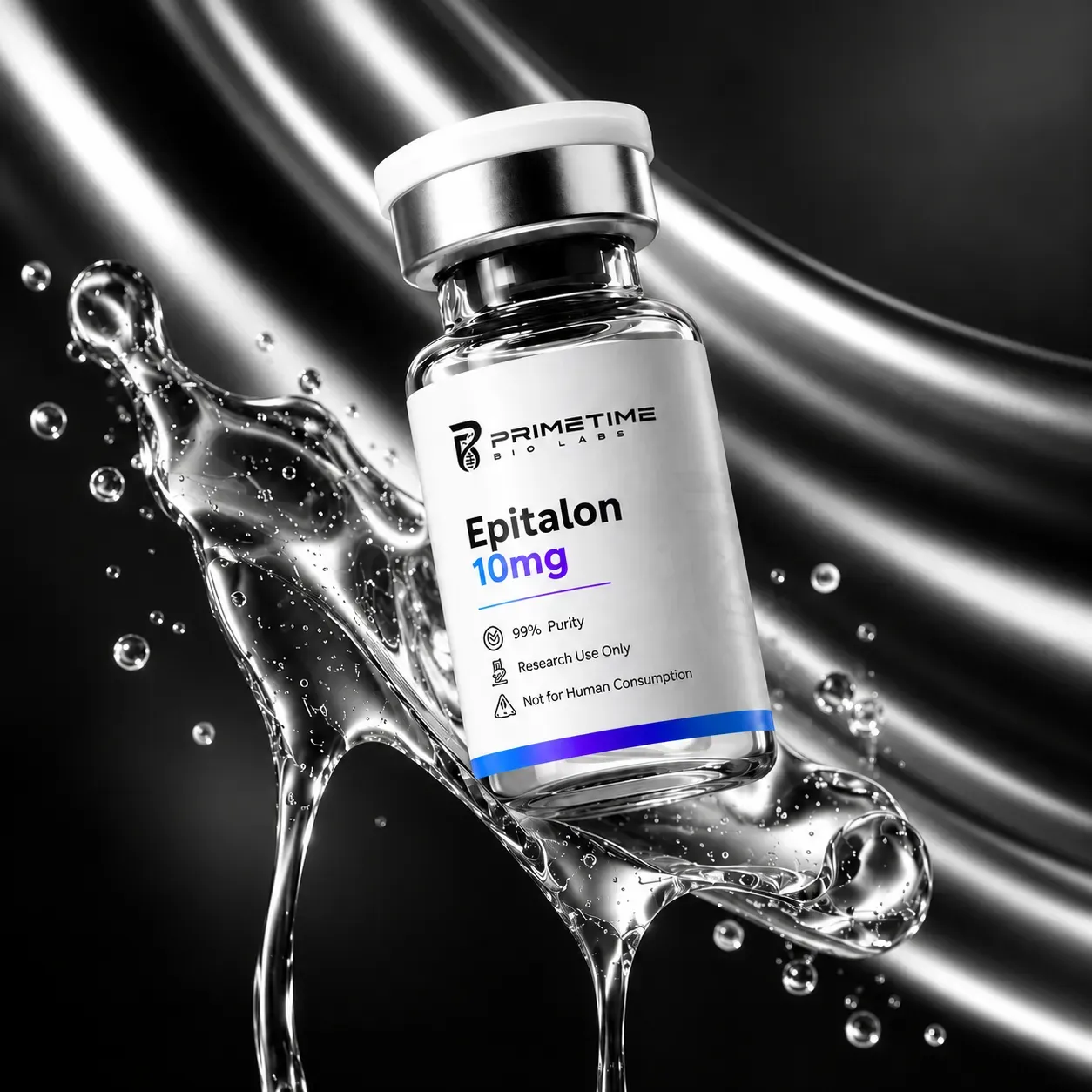
Epitalon
Longevity Peptide
Epitalon is a synthetic tetrapeptide, third-party tested by HPLC and mass spectrometry and supplied with a batch-matched Certificate of Analysis. Studied in cellular-aging and circadian-biology research models. For laboratory research use only.
Dosage
In stock, ready to ship
Certificate of Analysis
Epitalon 10 mg ships as a lyophilized powder in a sealed, light-protected vial with a printed lot number for full batch traceability. Each unit includes handling and reconstitution guidance for laboratory use. Epitalon — sometimes written Epithalon in the scientific literature — refers to the same synthetic tetrapeptide material. This page and all documentation for this product use "Epitalon" as the standard name; researchers searching under either spelling are looking at the same compound.
You May Also Like
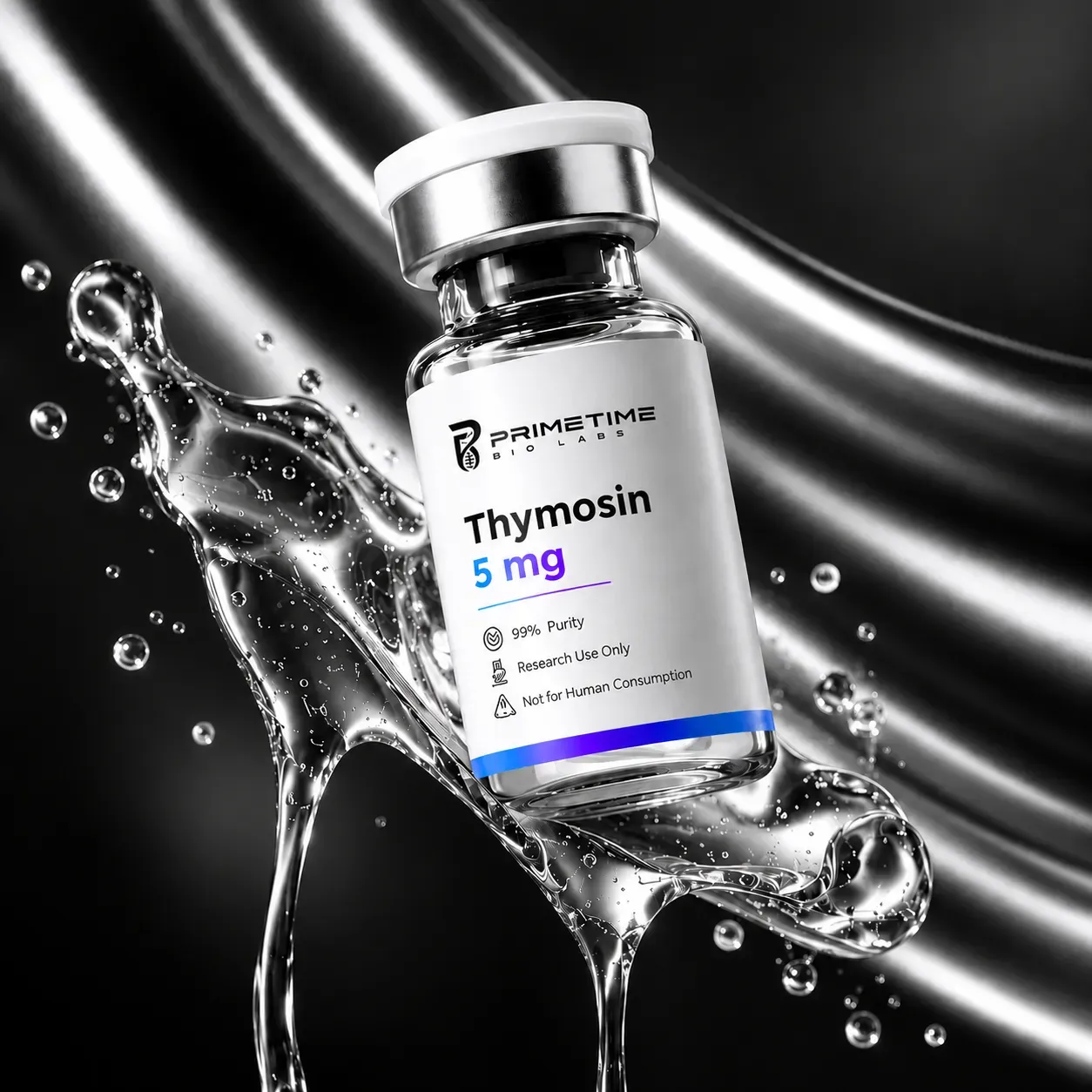
Thymosin
Longevity Peptide
Thymosin supplies Thymosin Alpha-1, a 28-amino-acid, N-acetylated peptide studied for its role in T-cell maturation and cytokine signaling within immune-function research models. Each lot ships as a lyophilized, single-use vial with a batch-matched Certificate of Analysis confirming identity and purity by HPLC and mass spectrometry. Supplied strictly for laboratory research use — not for human or animal consumption.
Dosage
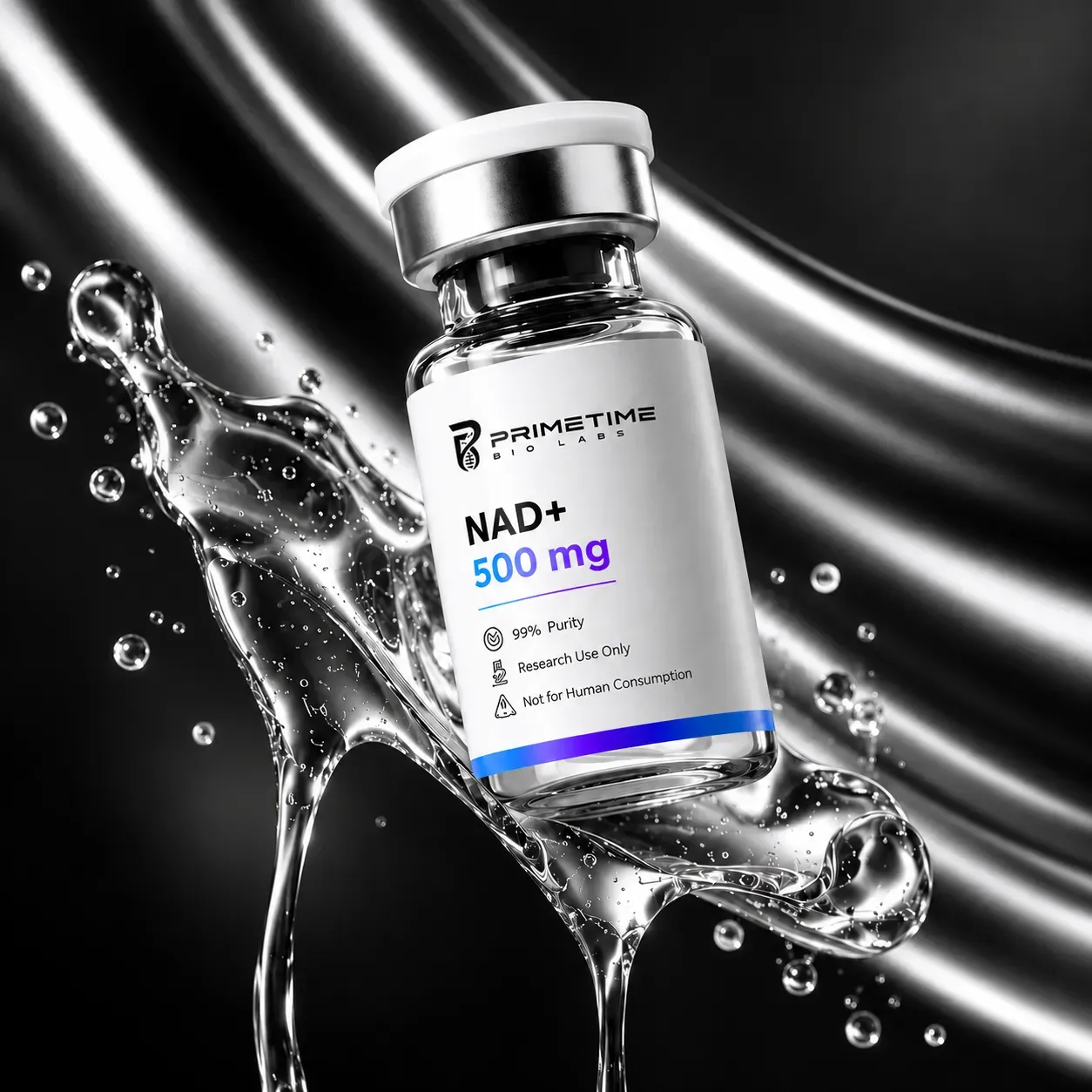
NAD+
Longevity Peptide
NAD+ is a research-grade nicotinamide adenine dinucleotide supply from PrimeTime BioLabs, produced as a sterile lyophilized powder and shipped with a batch-matched Certificate of Analysis. As the oxidized half of the NAD+/NADH redox pair, NAD+ is studied as a coenzyme in cellular energy metabolism, with particular research interest in sirtuin activation, mitochondrial function, and DNA repair pathways. This listing is supplied strictly for in-vitro laboratory research — it is not a supplement, not for human or animal use, and not evaluated by the FDA.
Dosage
Frequently Asked Questions
Find answers to common questions about this product, storage, and testing standards.
Epitalon is a synthetic tetrapeptide identified in scientific literature by the sequence Ala-Glu-Asp-Gly (AEDG). It is studied in laboratory settings, primarily in connection with cellular-aging and circadian-biology research.
Yes. "Epithalon" is an alternate spelling used in some scientific and commercial sources for the same synthetic tetrapeptide. This product is listed under "Epitalon."
Yes, Epitalon is a synthetic tetrapeptide — a chain of four amino acids.
Epitalon is generally identified by the amino-acid sequence Ala-Glu-Asp-Gly, abbreviated AEDG.
No. Epithalamin is a distinct, pineal-derived peptide preparation historically studied separately from synthetic Epitalon. The two are related in research history but are not the same material, and findings on one should not be assumed to apply to the other.
Epitalon is a synthetic tetrapeptide studied for its proposed role in telomerase activation and circadian rhythm regulation, making it a recurring subject in longevity and cellular-aging research models.
Each unit contains 10 mg of Epitalon supplied as a lyophilized powder in a sealed, light-protected vial with a printed lot number.
Store the lyophilized vial in a freezer at −20°C, protected from light. Once reconstituted, keep refrigerated at 2–8°C and use within the timeframe noted on the Certificate of Analysis.
Yes. Every batch is third-party tested, and a COA matching the lot number on your vial is available for download from your account after purchase.
The COA reports the batch number, purity result, and analysis date for the specific lot shipped, based on third-party HPLC and mass spectrometry testing.
Each batch is tested by an independent third-party lab using HPLC and mass spectrometry to verify purity and chemical identity.
No. Epitalon 10 mg is sold strictly for laboratory and research use. It is not a drug, food, or cosmetic product, has not been evaluated by the FDA, and is not intended for human or animal consumption.