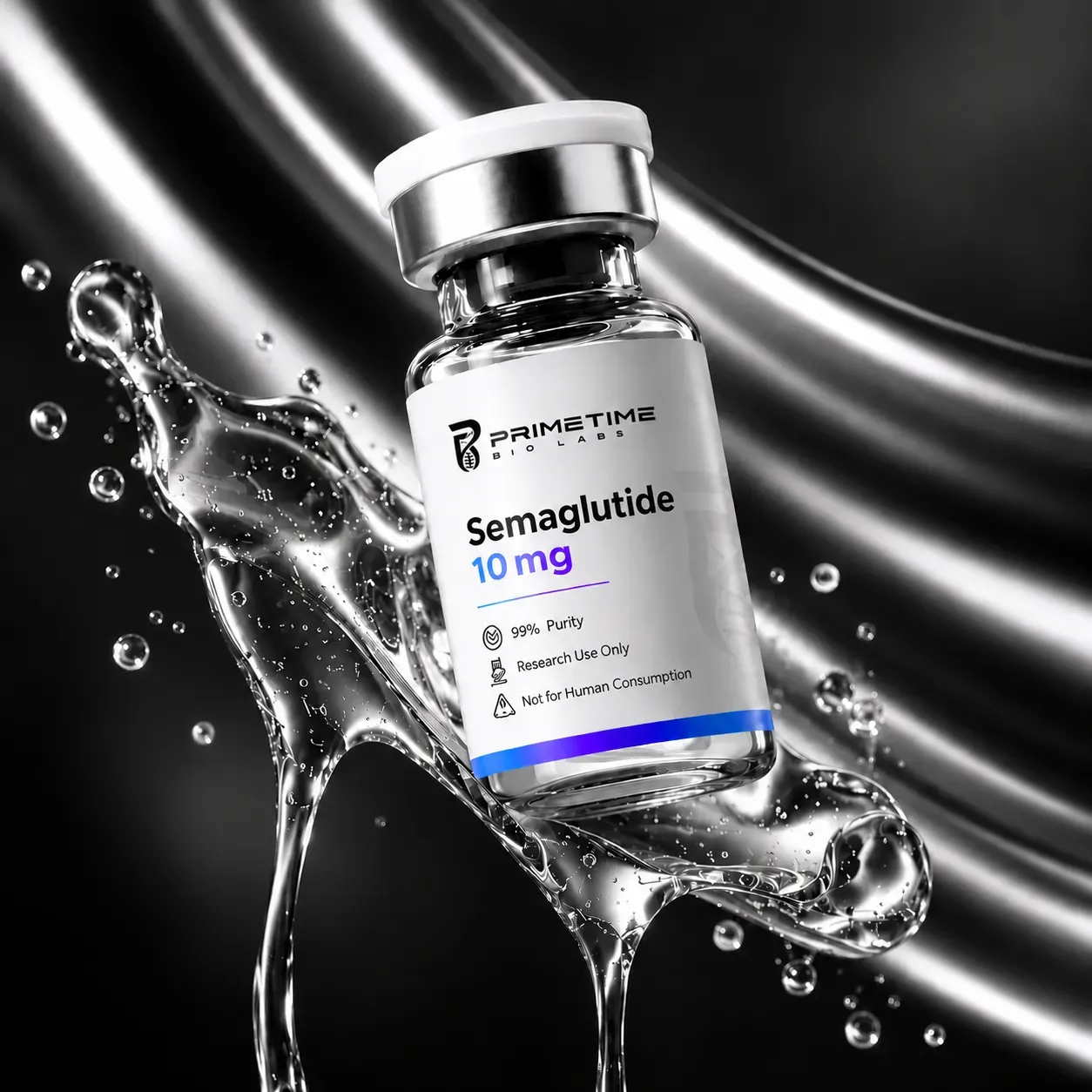
Semaglutide
Research Grade Peptide
Semaglutide is a research-grade GLP-1 receptor agonist peptide, supplied as a lyophilized powder with 99.5%+ purity and a batch-specific Certificate of Analysis. For laboratory research use only.
Dosage
In stock, ready to ship
Certificate of Analysis
Supplied as a sterile lyophilized powder, Semaglutide 10 mg arrives in a light-protected vial labeled with its lot number for traceability, along with reconstitution and storage guidance for research applications. Semaglutide is a synthetic, 31-amino-acid peptide and GLP-1 receptor agonist with the molecular formula C₁₈₇H₂₉₁N₄₅O₅₉, a molecular weight of approximately 4,113.6 g/mol, and CAS number 910463-68-2. The peptide backbone follows the sequence His-Aib-Glu-Gly-Thr-Phe-Thr-Ser-Asp-Val-Ser-Ser-Tyr-Leu-Glu-Gly-Gln-Ala-Ala-Lys-Glu-Phe-Ile-Ala-Trp-Leu-Val-Arg-Gly-Arg-Gly, with three modifications relative to native human GLP-1(7-37) that define its identity as a distinct research analog rather than a direct copy of the endogenous hormone. At position 2, 2-aminoisobutyric acid (Aib) replaces the naturally occurring alanine residue; because Aib is a sterically hindered, non-proteinogenic amino acid, it is not recognized as a cleavage site by dipeptidyl peptidase-4 (DPP-4), the enzyme primarily responsible for the rapid degradation of native GLP-1. At the lysine position corresponding to residue 26, a C18 fatty-diacid side chain is attached through a linker built from gamma-glutamic acid and two discrete PEG-based spacer units, giving the molecule a hydrophobic "arm" that is central to its research-relevant binding behavior. At position 34, arginine replaces the native lysine, a substitution primarily used to control the site of chemical conjugation during synthesis of the fatty-diacid chain. Collectively, these modifications make semaglutide roughly 94% homologous to human GLP-1(7-37) rather than identical to it — close enough to retain receptor recognition, but chemically distinct enough that data generated on native GLP-1 cannot be assumed to transfer directly to this synthetic analog, or vice versa. This distinction matters for anyone using the product in structure-activity relationship (SAR) work or comparative binding studies. The 10 mg designation refers to the total mass of lyophilized peptide contained in the vial, a standard research-supply format across the peptide industry. Peptides in dry, lyophilized form are substantially more chemically stable than in solution: once reconstituted, exposure to water, light, and ambient temperature accelerates degradation pathways such as deamidation, oxidation of susceptible residues, and aggregation, which is why the lyophilized vial is shipped and stored frozen and protected from light until a researcher is ready to prepare a working solution under their own laboratory protocols. The CAS number 910463-68-2 is the unique registry identifier assigned to semaglutide by the Chemical Abstracts Service, a standardized reference used across scientific literature, regulatory filings, and vendor documentation to unambiguously identify the exact compound independent of trade name or supplier. The molecular formula C₁₈₇H₂₉₁N₄₅O₅₉ describes the total atomic composition of the modified peptide — 187 carbon, 291 hydrogen, 45 nitrogen, and 59 oxygen atoms — reflecting both the 31-residue peptide backbone and the C18 fatty-diacid/spacer modification attached at position 26. Researchers cross-referencing semaglutide across different literature sources or supplier documentation can use the CAS number and molecular formula together to confirm they are comparing data on the same compound, regardless of how a given source names or brands it.
You May Also Like
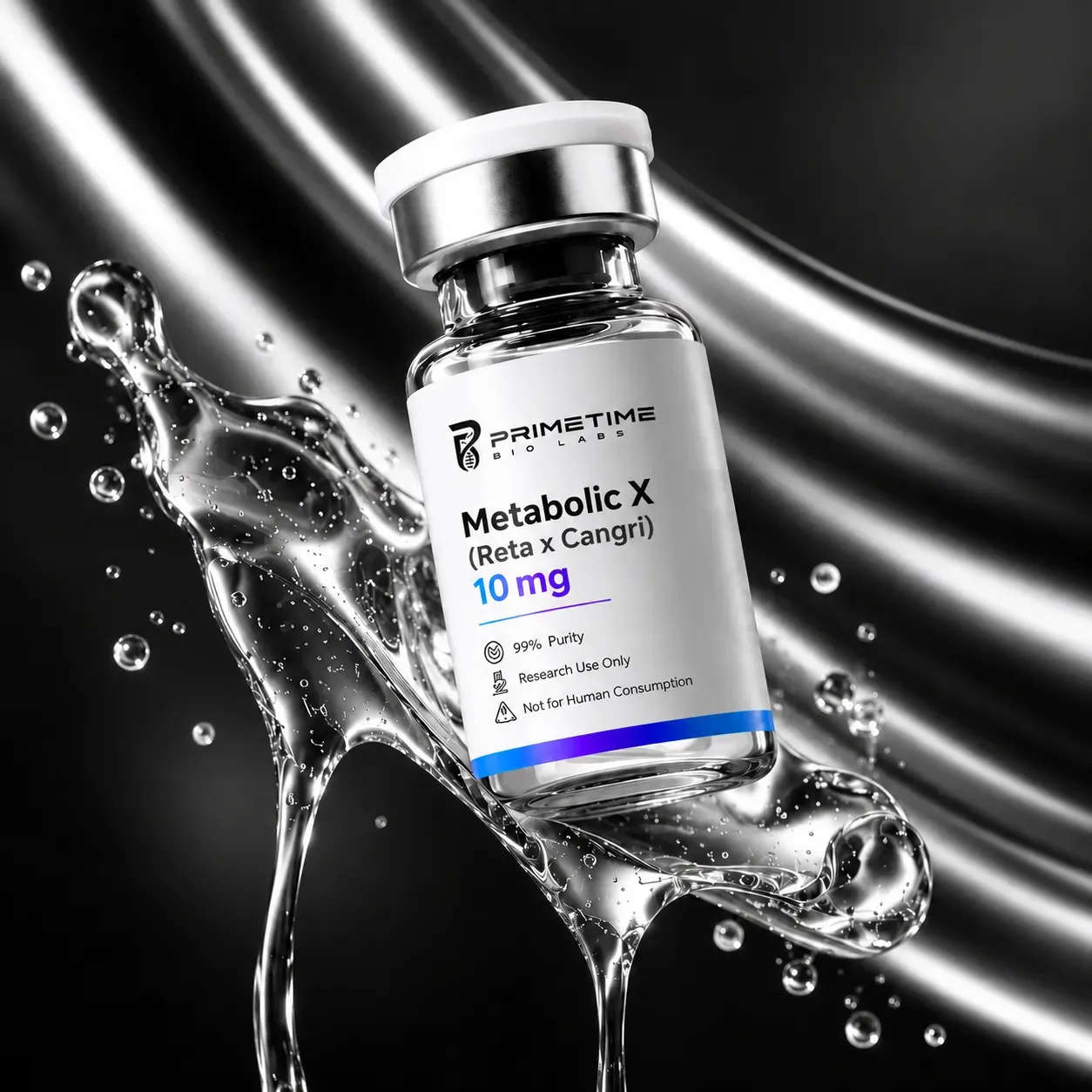
Metabolic X (Reta x Cangri)
Research Grade Peptide
Metabolic X (Reta x Cangri) pairs retatrutide, a GIP/GLP-1/glucagon triple agonist, with cagrilintide, a long-acting amylin receptor agonist, in a single research-grade vial. It's supplied for laboratory investigation of combined incretin and amylin pathway signaling on appetite and energy balance, for use by qualified research personnel only.
Dosage
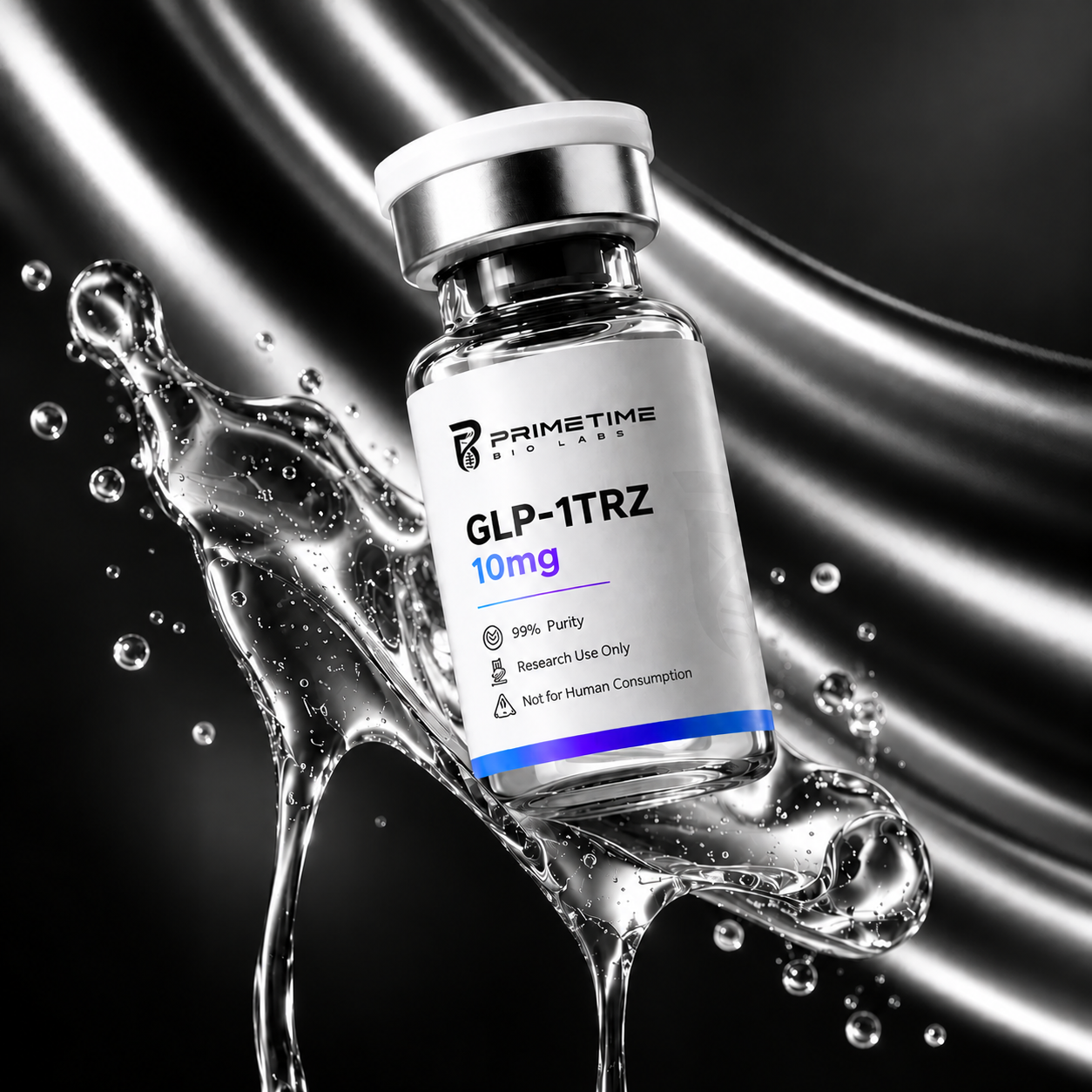
GLP-1TRZ
Research Grade Peptide
GLP-1TRZ is PrimeTime BioLabs' research peptide name for a tirzepatide research material. Tirzepatide is a synthetic dual agonist studied for its combined activity at the GIP and GLP-1 receptors, and researchers have used it to examine insulin secretion, gastric emptying, and appetite-related signaling pathways in laboratory models.
Dosage
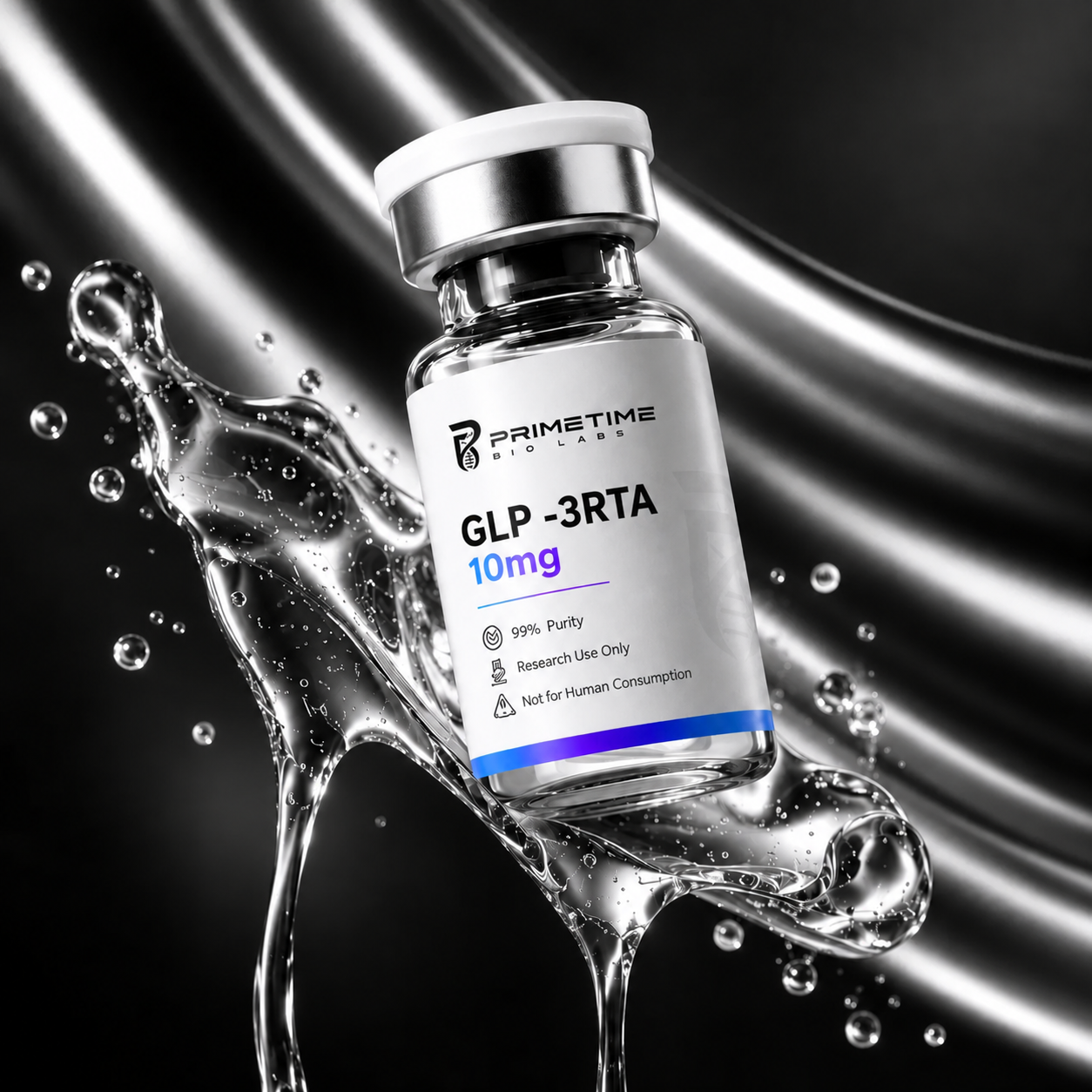
GLP-3RTA
Research Grade Peptide
GLP-3RTA is PrimeTime BioLabs' commercial name for a synthetic peptide studied in laboratory settings for its combined activity at the GIP, GLP-1, and glucagon receptors — a mechanism commonly referred to in research-market literature as triple-receptor agonism. The material is supplied strictly for in vitro and analytical research use.
Dosage
Frequently Asked Questions
Find answers to common questions about this product, storage, and testing standards.
Semaglutide is studied as a long-acting GLP-1 receptor agonist, most often in research looking at glucose-dependent insulin secretion, gastric emptying, and satiety signaling. In practice, that means it shows up in receptor-binding assays, cAMP signaling studies, and other in vitro models built around incretin biology — work focused on how the molecule behaves at the receptor level, not on any outcome in a living subject.
Yes. It's a synthetic, 31-amino-acid peptide built on the GLP-1 backbone, with three specific modifications that set it apart from the native hormone. Those changes are well documented and are part of what makes it useful as a stable research reagent.
Yes — semaglutide binds and activates the GLP-1 receptor, a class B G protein-coupled receptor, triggering the same downstream cAMP signaling pathway that native GLP-1 uses. That mechanism is the basis for most of the incretin and glucose-signaling research this compound is used in.
Semaglutide has a molecular formula of C₁₈₇H₂₉₁N₄₅O₅₉ and a molecular weight of approximately 4,113.6 g/mol, registered under CAS number 910463-68-2. These figures are consistent across independent chemical references, so you can use them to confirm you're comparing data on the same compound, no matter which supplier or source you're reading.
The 10 mg refers to the total mass of lyophilized peptide in the vial — a standard way research suppliers package peptide material. It describes the quantity supplied, not a recommended amount for any particular use.
Keep the lyophilized vial frozen and protected from light until you're ready to use it — that's what keeps the peptide chemically stable over time. Once reconstituted, it should be refrigerated and used within the window noted on its Certificate of Analysis, since exposure to light, warmth, or extended time in solution can speed up degradation.
Yes. Each batch comes with a COA that ties its purity and identity results to that specific lot, so you can confirm the number on your vial matches the documentation you're working from.
No. This material has not been reviewed or approved by the FDA for any use. It's sold strictly for laboratory and in vitro research, not as a drug, supplement, or consumer product.
No. Ozempic, Wegovy, and Rybelsus are FDA-approved semaglutide medicines manufactured under their own regulatory oversight and clinical evidence. This is a separate research-grade material, and it isn't a substitute or equivalent for any of those products.
No. It's intended exclusively for qualified laboratory and in vitro research, and it isn't meant to be administered to humans or animals under any circumstances.
There's no minimum order quantity. Bulk pricing is available on select orders for qualified research institutions — reach out to Prime Time Bio Labs directly for details.
It confirms the chemical side of things — purity by HPLC and identity by mass spectrometry — for that specific batch. It doesn't test for sterility, endotoxins, or biological activity, and it isn't evidence of safety or effectiveness for any particular use.