The short answer
One vial in our catalogue costs $44.99. Another costs $99.99. The cheaper one holds five times more peptide.
That is not a pricing error. It is what happens when you stop comparing stickers and start comparing material.
We sell 25 vial sizes across 21 products. Prices run from $44.99 to $99.99 per vial. Per milligram, they run from $0.14 to $99.99.
Every figure below comes off our own live product pages, read on 22 October 2026. We divided each listed price by the listed vial mass. Nothing is estimated and nothing is rounded up from a range.
Most pricing guides give you a range sampled from sellers they do not name, on a date they do not state. This one takes a single catalogue apart and shows the arithmetic. The trade is obvious. You get one seller's real numbers instead of a market average built from guesses.
One thing this guide will not give you is a monthly cost. We explain why further down, and the reason is not modesty.
What 25 sizes actually cost
Two of our catalogue names need translating first. GLP-1TRZ is our tirzepatide research material. GLP-3RTA is our retatrutide research material. If you arrived here searching either compound name, those are the rows to read.
Here is the whole catalogue, cheapest per milligram first.
Product | Also known as | Size | Price | Per mg |
|---|---|---|---|---|
NAD+ | Nicotinamide adenine dinucleotide | 500 mg | $68.99 | $0.14 |
GHKCU | GHK-Cu | 50 mg | $54.99 | $1.10 |
AHKCU | AHK-Cu | 50 mg | $54.99 | $1.10 |
KLOW | Four-peptide blend | 80 mg | $89.99 | $1.12 |
GLOW | Three-peptide blend | 70 mg | $79.99 | $1.14 |
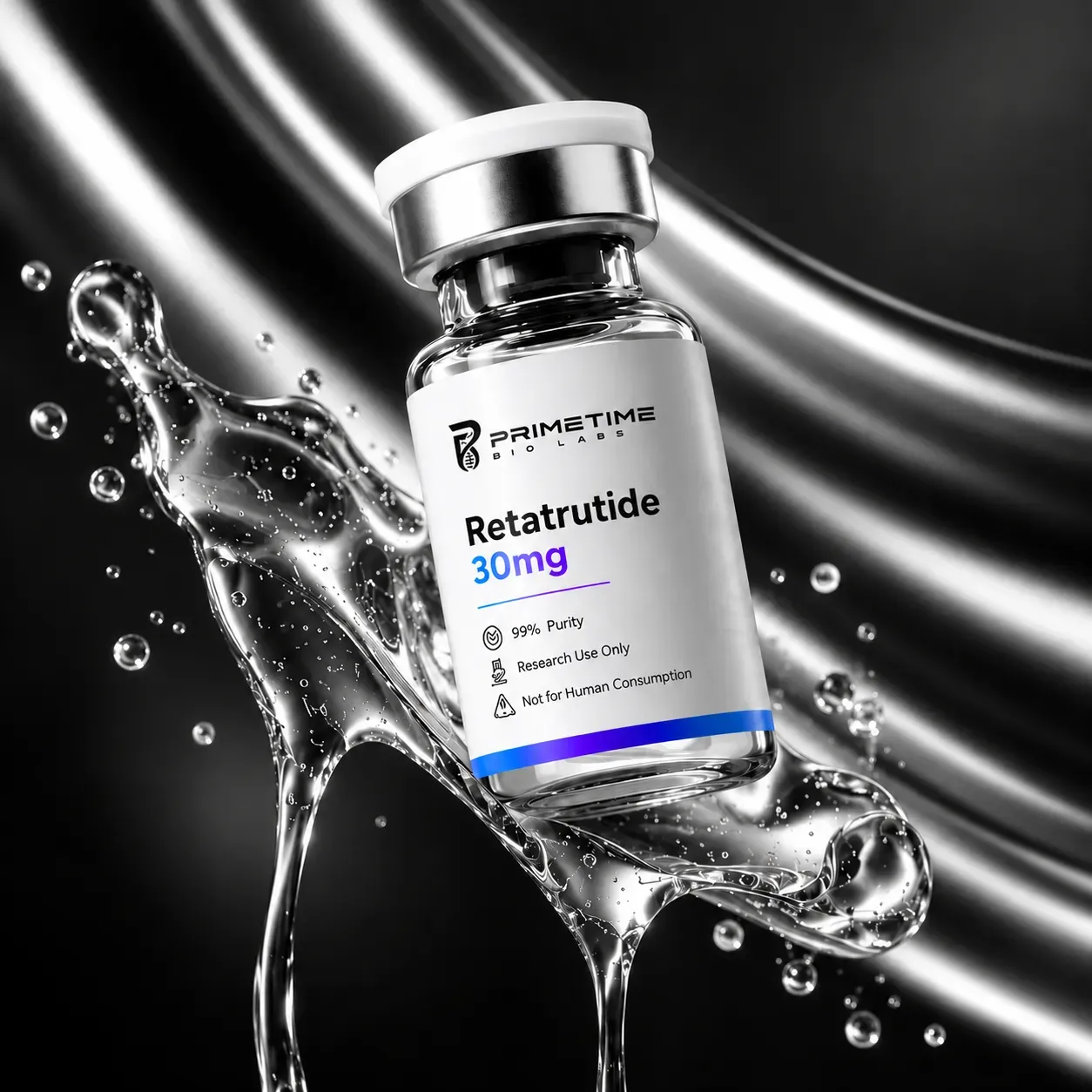
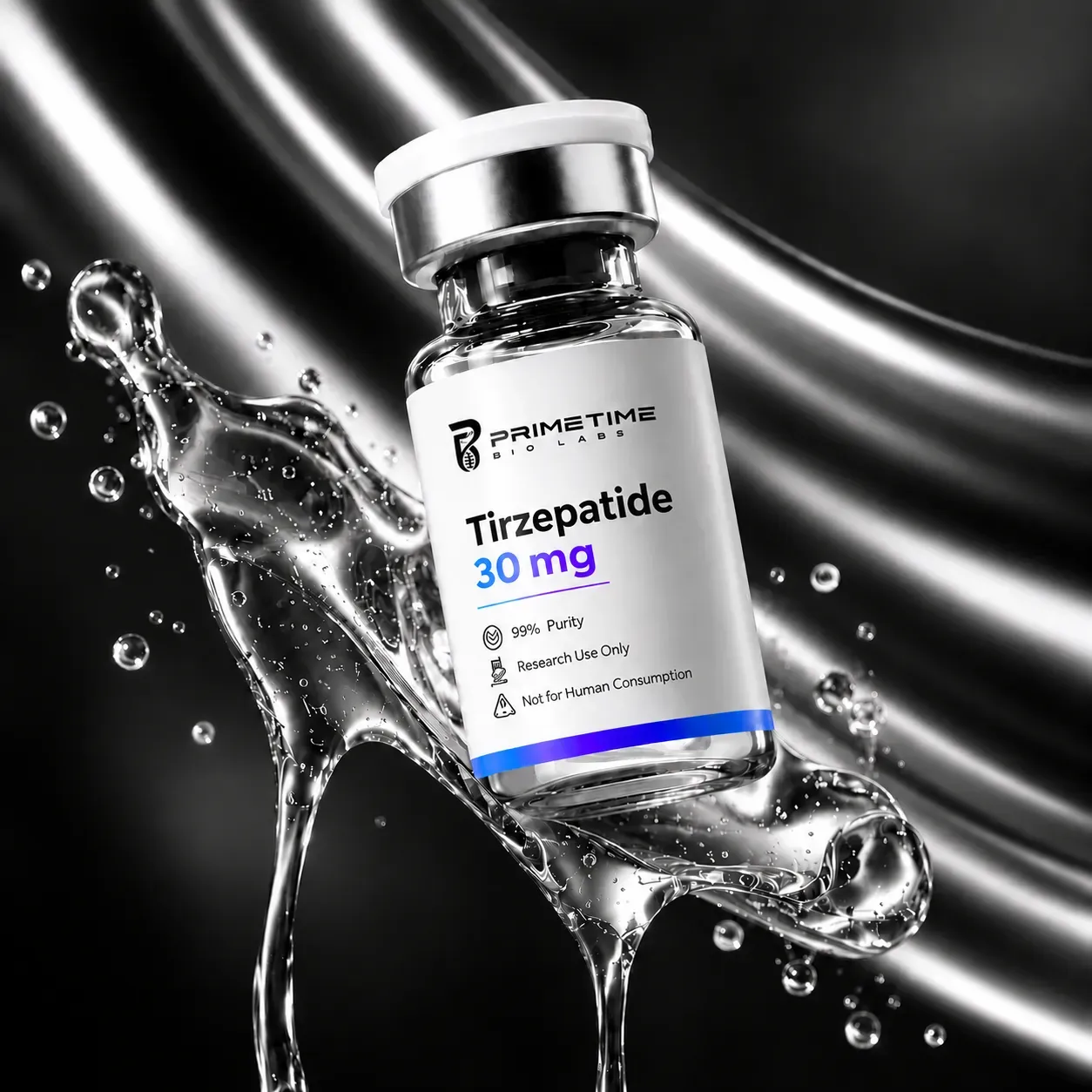
GLP-1TRZ | Tirzepatide | 30 mg | $89.99 | $3.00 |
GLP-3RTA | Retatrutide | 30 mg | $99.99 | $3.33 |
MOTS-c |
| 20 mg | $79.99 | $4.00 |
Wolverine | BPC-157 and TB-500 | 20 mg | $84.99 | $4.25 |
Tesamorelin |
| 20 mg | $89.99 | $4.50 |
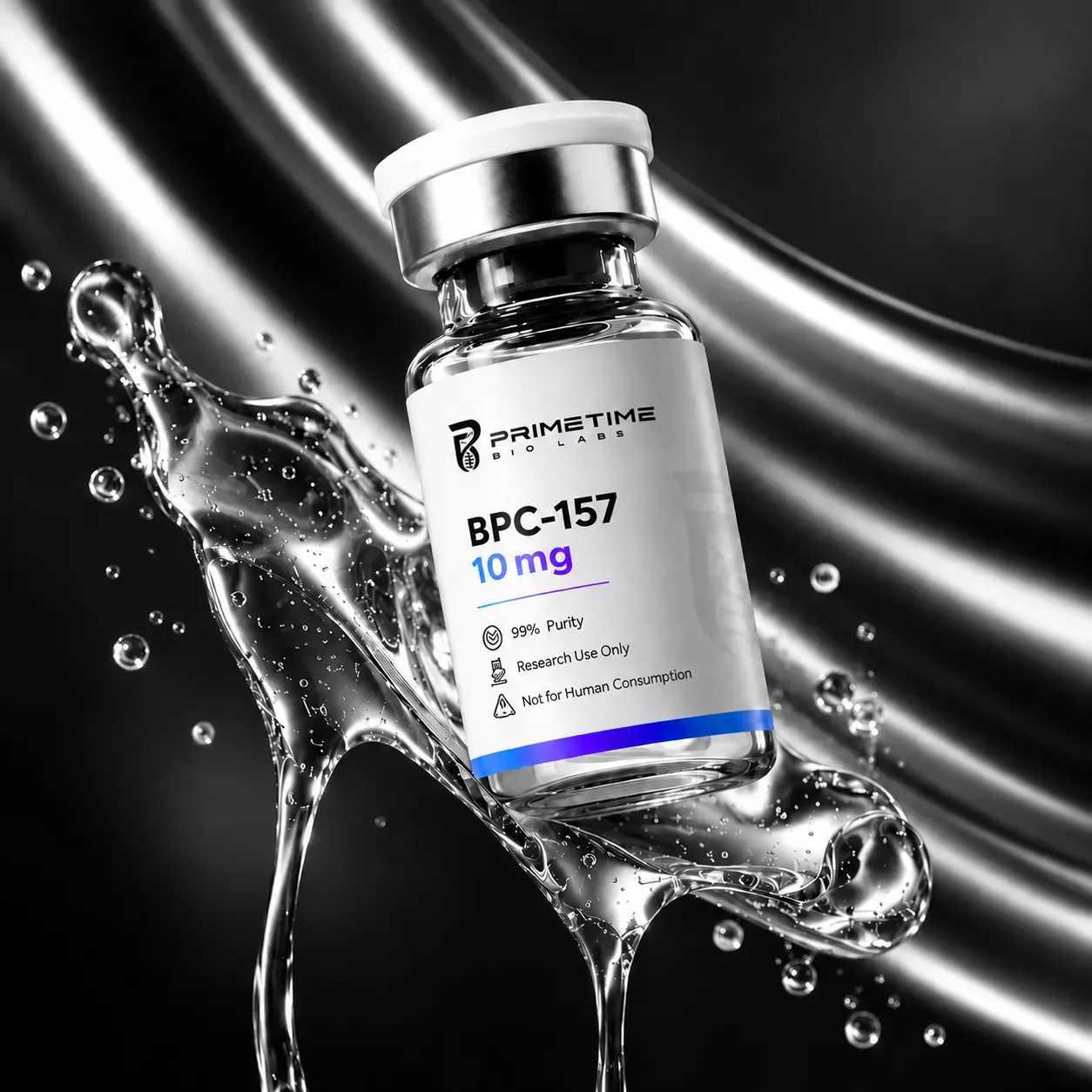
BPC-157 |
| 10 mg | $59.99 | $6.00 |
TB-500 |
| 10 mg | $59.99 | $6.00 |
KPV |
| 10 mg | $59.99 | $6.00 |
DSIP |
| 10 mg | $59.99 | $6.00 |
Semax |
| 10 mg | $59.99 | $6.00 |
Epitalon |
| 10 mg | $59.99 | $6.00 |
PT-141 | Bremelanotide | 10 mg | $59.99 | $6.00 |
MOTS-c |
| 10 mg | $59.99 | $6.00 |
Semaglutide |
| 10 mg | $59.99 | $6.00 |
GLP-1TRZ | Tirzepatide | 10 mg | $61.99 | $6.20 |
Tesamorelin |
| 10 mg | $64.99 | $6.50 |
GLP-3RTA | Retatrutide | 10 mg | $64.99 | $6.50 |
Metabolic X | Retatrutide and cagrilintide | 10 mg | $69.99 | $7.00 |
Thymosin | Thymosin alpha-1 | 5 mg | $44.99 | $9.00 |
IGF1-LR3 | Long R3 IGF-1 | 1 mg | $99.99 | $99.99 |
The method is deliberately boring. We took the list price shown on each product page, divided it by the vial mass on that same page, and rounded to two decimals. These are list prices. They are not promotional prices, discounted prices or military-discount prices.
Two numbers in that table do most of the work. The 500 mg NAD+ vial delivers a milligram for 14 cents. At the far end, 1 mg of IGF1-LR3 costs $99.99. Everything else falls between them, and the middle of the catalogue is tightly packed. Sixteen of the 25 sizes sit between $4.00 and $7.00 per milligram.
The gap between the cheapest and dearest milligram is more than 700 times. That number deserves one immediate caveat.
NAD+ anchors the cheap end, and NAD+ is not a peptide. It is a dinucleotide, as our own product page says. Researchers buy it alongside peptides, which is why we stock it. The chemistry is a different class. Drop it, and the spread across actual peptides still runs from $1.10 to $99.99 per milligram. That is 91 times, from one shelf.
The blends need a similar note. KLOW, GLOW and Wolverine each hold more than one peptide in a single vial, and we do not publish the component split. Their per-milligram figures describe total powder mass, not a single compound. Compare them to each other if you like. Comparing them to a single-compound vial measures different things.
The $45 vial that holds five times more than the $100 one
Thymosin alpha-1 costs $44.99 for 5 mg. IGF1-LR3 costs $99.99 for 1 mg. You pay roughly twice as much for a fifth of the material, which works out eleven times dearer per milligram.
Chain length explains most of it. Thymosin alpha-1 is a 28-residue peptide. IGF1-LR3 is an engineered analogue of insulin-like growth factor 1 and runs to 83 residues, against 70 in the native protein.
Solid-phase synthesis builds a chain one residue at a time. Each residue needs its own cycle of steps, and no cycle finishes at a perfect 100%. Small losses at each step do not add up. They multiply. A review of Fmoc solid-phase synthesis by Behrendt, White and Offer puts it plainly, describing synthesis as a stepwise process with errors compounded throughout.
Length is not the only thing that bites. Some sequences fold back on themselves while still attached to the resin, forming sheet structures that block the next reaction. Chemists have called these difficult peptides since the 1980s, and a Chemical Society Reviews survey by Paradís-Bas and colleagues maps the problem and the workarounds. Bulky residues cause related trouble through steric hindrance, which Mäde and colleagues tie directly to low yields.
Here is the limit of what our catalogue can tell you. It shows what we charge. Our manufacturing costs and our margins stay closed to you. Chain length explains the pattern in these prices without proving the accounting behind them.
Our explainer on solid-phase peptide synthesis walks through the cycle itself.
Why the same peptide costs less per milligram in a bigger vial
Four products in the catalogue come in two sizes. In all four, the bigger vial is cheaper per milligram.
Product | Small vial | Large vial | Saving |
|---|---|---|---|
GLP-1TRZ (tirzepatide) | $6.20/mg | $3.00/mg | 52% |
GLP-3RTA (retatrutide) | $6.50/mg | $3.33/mg | 49% |
MOTS-c | $6.00/mg | $4.00/mg | 33% |
Tesamorelin | $6.50/mg | $4.50/mg | 31% |
Every pair moves the same direction. The saving runs roughly a third to a half.
Fixed costs explain the direction. A synthesis run carries overheads that barely change with batch size. Setup, cleaning, analysis and documentation all have to happen whether the run yields a little or a lot. Spread those fixed costs across more material and the cost per milligram falls.
That is a general feature of manufacturing, not a disclosure about how we set these four prices.
The savings also sort themselves by how big the jump is. Tirzepatide and retatrutide both triple their vial mass from 10 mg to 30 mg, and both save close to half per milligram. MOTS-c and tesamorelin both double from 10 mg to 20 mg, and both save about a third. Bigger jump, bigger saving, in a pattern consistent across all four.
Only four products offer the choice at all. Our other 17 come in one size, so there is no larger-vial saving to find on them.
So the practical answer to buying larger is straightforward. On these four products, per milligram, larger is cheaper. We are not going to tell you how long a vial lasts, because that question only has an answer if you assume a dosing schedule.
Nine different compounds, one price
Nine products in our catalogue are 10 mg vials at $59.99. BPC-157, TB-500, KPV, DSIP, Semax, Epitalon, PT-141, MOTS-c and semaglutide all sit at exactly the same number.
These molecules are nothing like each other. KPV is a tripeptide, three residues long. Semaglutide is a 31-residue GLP-1 analogue carrying a fatty-acid modification. By everything in the section above, they should not cost the same to make. One is roughly ten times the length of the other.
They cost the same anyway.
That tells you something the rest of this guide cannot. Retail prices cluster at shelf points. A seller picks round, comparable numbers for a tier of products. Cost differences underneath get absorbed into the tier rather than shown to you.
Both things are true at once. Manufacturing cost shapes a catalogue, which is why a 1 mg vial can cost $99.99. That cost does not pass straight through to any individual sticker, which is why nine unrelated compounds share one.
Anyone who tells you peptide prices track production cost exactly is simplifying. Our own shelf is the evidence.
This matters when you compare sellers. Two catalogues can show the same $59.99 for the same compound while the material behind them differs in purity, testing and documentation. The price told you nothing on its own. What the shelf point hides is exactly what a certificate of analysis is for, which is the next section.
What you pay for when a peptide gets made
Four things drive what a batch costs its maker. We can source three of them properly and we will say so when we cannot.
Chain assembly comes first. Every extra residue means another coupling cycle, and yield losses multiply across cycles rather than adding. That puts a ceiling on the method. A 2024 analysis puts the practical efficient limit of solid-phase synthesis at around 100 amino acids. Fourteen pharmaceutical companies compiled it through the ACS Green Chemistry Institute Pharmaceutical Roundtable. Production-scale runs have been demonstrated to around 70 residues.
Sequence difficulty comes second, and it does not follow length neatly. Behrendt and colleagues note that the commonly quoted figure of 50 residues is close to meaningless, because many far shorter sequences prove extremely problematic.
Purification is the expensive one. Crude material coming off the resin is not specification-grade material. Separating the target peptide from deletion and truncation impurities is hard precisely because those impurities resemble the target. The same 2024 analysis found that downstream processing accounts for roughly half the resource intensity of peptide manufacture. It makes the economic point directly. Losses after assembly have to be paid for with extra synthesis upstream, because that material already carries the full cost of being built.
That analysis also puts peptides in context. Solid-phase peptide synthesis averaged a process mass intensity near 13,000 across the processes assessed. Small molecules sit at a median of 168 to 308, and biopharmaceuticals near 8,300. Peptides are resource-hungry to produce by the standards of the industry that produces them.
Testing is the fourth, and here we stop short. Purity and identity testing are mandatory release testing on a GMP batch, not optional extras. What we could not find is any credible figure for what that testing costs per batch. No published source gives a dollar amount or a share of production cost. We are not going to invent one.
What a certificate of analysis can and cannot tell you
Part of what sits behind a vial's price is testing. It is worth knowing what the two standard tests actually establish.
Method | What it measures | What it does not establish |
|---|---|---|
HPLC | The share of material that is the target compound | Which impurities are present, or whether they matter |
Mass spectrometry | That the molecular weight matches the stated compound | That the sequence is correct end to end |
High-performance liquid chromatography separates a sample and reports what proportion of it is the intended peptide. A 99% purity figure means 1% is something else. The number alone does not say what that something else is.
Mass spectrometry answers a different question. It confirms the material weighs what the named compound should weigh. Two different sequences can share a molecular weight, so weight is strong evidence of identity rather than proof of it. Sequence confirmation needs a third method.
What neither test covers matters more than most buyers realise. A purity percentage is not evidence of sterility. It says nothing about biological activity. Nor does it establish that the material suits any particular use.
The analytical burden on a regulated batch is heavier than two tests. One FDA reviewer case study describes the workload on a synthetic peptide drug substance. The sponsor used seven analytical methods and 78 synthesised impurity reference standards. All of that went to showing that impurities separated cleanly from the main peak. Research-grade material is not held to that standard. The comparison is useful anyway, because it shows how much work sits behind a number that looks like one line on a certificate.
A seller who commissions independent testing pays for it on every batch, and a seller who skips it does not. That is a real difference in what sits behind two similar-looking prices. Our guide to reading a certificate of analysis covers how to check one properly.
Three markets, three prices, and why you cannot compare them
Search for peptide costs and you will find three very different numbers presented side by side. They describe three separate markets.
Market | What you buy | Unit |
|---|---|---|
Research supply | Lyophilised material for laboratory use | Per vial |
Compounded preparation | A pharmacy-prepared product, by prescription | Per fill |
Approved brand product | An FDA-approved drug with a label | Per month |
The brand column has figures we can verify, and they are more complicated than any single number suggests. Eli Lilly's self-pay prices for Zepbound run from $299 a month at 2.5 mg to $699 at 10 mg and above. A savings card brings the higher doses to $449, if you refill within 45 days. Novo Nordisk prices Wegovy's pen at $199 a month for a new patient's first two fills, then $349. Both schemes carry conditions and both expire on 31 December 2026.
Notice what those figures are not. Neither company publishes a list price on those pages. Every number is a conditional self-pay or program price, tied to a dose and an expiry date. A guide that reduces all of that to "brand costs about $1,000 a month" has invented a number.
The compounded column we are leaving blank, and the reason is not coyness. We could not verify current compounded prices from a source we would stand behind, so we are not printing any. Two facts about that market are worth more than a price anyway. The FDA resolved the tirzepatide shortage in October 2024 and the semaglutide shortage in February 2025, which closed the shortage-based route for compounding both. Retatrutide and cagrilintide cannot be used in compounding under federal law at all. Two products in the table above therefore have no lawful compounded equivalent.
Our guide on whether peptides are legal covers the legal side of these three tracks. For how retatrutide and tirzepatide compare on evidence rather than price, see our comparison of the two.
Why we will not tell you what peptides cost per month
Plenty of pricing guides answer this. We are not going to, and the reason is structural.
A monthly cost needs a dosing schedule. There is no way to turn a vial price into a monthly figure without deciding how much someone uses per day and how often. For a research compound, writing that schedule down describes human use. These products are supplied for laboratory research and nothing else.
The FDA has been explicit on this point. In warning letters dated 24 August 2026, it addressed research-use disclaimers directly. A disclaimer does not by itself settle what a product is intended for. The agency looked instead at objective evidence of intended use. Dosing guidance attached to a price is exactly that kind of evidence.
There is a second reason, and it is simply about arithmetic. Published monthly research costs often fail to reconcile against the vial sizes printed beside them. A guide will name a daily amount, then price a month of it against a vial that cannot hold a month's worth. The figure looks precise and the maths does not close.
Per vial and per milligram are different. Both are properties of the thing you are buying, and both let you compare two sellers directly. The table at the top of this guide gives you both.
When a low price is worth a second look
A cheap vial is not a warning sign on its own. Some sellers genuinely run leaner than others. These five things are worth asking about.
- No certificate of analysis available before you buy, only a promise of one afterwards
- A purity claim with no method and no number, such as high purity or lab tested
- A certificate that names no testing laboratory
- Documentation you cannot match to the specific lot in your hand
- A price far outside the range every comparable seller is quoting
None of these proves anything by itself. A missing certificate might be a bad website rather than a bad batch. Sometimes a low price is simply a genuine saving.
Two of the five carry more weight than the others. A certificate you cannot match to your lot is close to useless. The whole point of batch testing is that it describes one batch. An unnamed laboratory is a similar problem. You cannot check the work of a laboratory you cannot identify.
We are not going to tell you what the cheapest source is, and any guide that does has stopped being a pricing guide. Price sits alongside purity, testing and documentation. Reading it on its own is how people end up comparing two numbers that describe different things.
What these five signals are is reasons to ask a question before you order, rather than after. Our supplier due-diligence checklist turns this into five questions you can put to any seller, including us.
The bottom line
The catalogue shows what we charge. It does not show what anything costs us to make.
Across 25 sizes, prices run $44.99 to $99.99 per vial and $0.14 to $99.99 per milligram, checked on 22 October 2026. Chain length and purification explain the broad shape of that range. A 1 mg vial can outprice a 5 mg vial because 83 residues cost more to build than 28.
Shelf conventions complicate the picture. Nine unrelated compounds share one price in this catalogue, which is a fair warning against reading any single sticker as a cost signal.
Three things this guide cannot establish. It cannot show our production costs. Nor can it demonstrate that price tracks quality. And nothing here says whether this material suits any purpose.
What it does give you is two comparable units and a date. Take the per-milligram column to any other seller and the comparison works, because a milligram is a milligram wherever you buy it.
Come back to the table, and check the date on it. Prices move.